LocalLink Hub podcast
Hello. Welcome to LocalLink Hub’s podcast, a show with local impact for global change. LocalLink Hub is the localization and partnership initiative for Terre des hommes. LocalLink Hub is a global online platform that provides free e-learning and capacity development resources for local and national actors. Through this platform, Terre des hommes aims to contribute to a power shift to localize aid, making the provision of aid more equal and sustainable. We support our local partners to become better prepared for future crisis. This project is funded by the SOMAHA Foundation.








Episodes
Sep 28, 2026
Sep 28, 2026
28 min
What does it take to truly shift power in humanitarian and development work? In this episode of the LocalLink Hub Podcast, Martin Gallard speaks with Paul Cleary, Partnership and Localization Advisor at Trócaire Ireland, about the future of localization and the growing role of local actors in leading change.
Together, they explore how international NGOs can move beyond traditional partnerships by sharing funding, decision-making power, visibility, and leadership with local organizations. From equitable funding models and overhead cost recovery to local representation in global forums, Paul shares practical examples of how Trócaire is supporting stronger, more sustainable local leadership.
Tune in for an insightful conversation on what successful localization looks like and how the aid sector can build a more equitable future. 🎙️🌍

Sep 2, 2026
Sep 2, 2026
30 min
How does a shy 12-year-old become a leading youth advocate and founder of a youth-led NGO? In this inspiring episode of the LocalLink Hub podcast, Januka Jamarkattel shares her journey from joining a child club in Nepal to leading climate action, youth empowerment, and community development initiatives. Discover why meaningful youth participation matters, how young people can create their own opportunities, and what it takes to turn passion into lasting change.
🎧 Listen now and be inspired by the next generation of changemakers. The podcast was recorded before the unfortunate recent events in Nepal.

Jul 13, 2026
Jul 13, 2026
27 min
How can training, support, and trust change a life? In this episode of the Local Link Hub Podcast, Enikő Vass talks with Mariel Hysa from Edu-Innovation Albania about helping young people and vulnerable groups build brighter futures.
Hear inspiring stories of a woman who opened an auto spare parts business after overcoming trafficking and a young returnee who turned his electrical skills into a successful business. Discover how local organizations, community partnerships, and youth participation are creating real opportunities and helping prevent human trafficking in Albania.
Tune in for a powerful conversation about resilience, inclusion, and the impact of believing in people's potential. 🎙️💙

Apr 23, 2026
Apr 23, 2026
34 min
In this episode we are joined by three experts who are reimagining how international and local groups work together:
Julien Georges (Head of Delegation for Terre des hommes in Nigeria) sets the stage by explaining the "shocking" challenges families face in 2026, including food shortages and shrinking aid budgets.
Moussa Ismail Bello (Localization and Partnership Manager for Terre des hommes) explains the unique PACLAC project, where international groups step back to let local partners lead.
Stephen Oladipo (Director of Rise to Inspire Africa initiative) shares the inspiring story of his own NGO’s journey toward independence and strength.
Hear how Terre des hommes stopped doing the work and started supporting it, moving towards a true partnership. Discover why investing in local leaders is not just a "charity" project, but a smart, long-term strategy for a better humanitarian system.

Jan 15, 2026
Jan 15, 2026
50 min
As global aid budgets face significant reductions and humanitarian needs continue to escalate, the sector is forced to confront a critical turning point. In this episode of the Positive Impact podcast, host Charlotte Lang leads a transparent and rigorous discussion on the "inexorable change" of localization. This conversation brings together Martin Gallard, Partnerships and Localisation Advisor at Terre des Hommes Lausanne; Claire Barthélémy, Course Director at the Geneva Centre of Humanitarian Studies; and Esther Opoka Adong, a humanitarian practitioner and Master’s student at the University of Geneva. With our local partner gusest:
Viktoriia Preobrazhenska, Ceo, Dobrobut, Deep Purkayastha, director Praajak Development Society India. Mohammad Zahidul Islam, director Breaking the Silence Bangladesh
From this podcast you can understand the profound "identity crisis" currently facing international organizations. The panel moves beyond theory to discuss the friction between an international NGO's struggle for financial survival and the ethical necessity of transferring power to local actors. Through professional and serious analysis, the guests explore how localization serves as a mechanism for justice and the decolonization of humanitarian action.
The narrative of the episode centers on the three pillars of sustainability, equality, and power shift. Martin Gallard outlines how Terre des hommes aims to translate these values into a concrete financial objective: ensuring that 20% of the organization’s operational budget is managed directly by local and national NGOs by 2028. This shift is illustrated through the work of Viktoriia Preobrazhenska, head of the Ukrainian organization Dobrobut, who shares how local teams drive case management and needs assessments on the ground in Kharkiv and Ivano-Frankivsk.
The discussion also tackles the complex obstacles to this transition, from the "dominant narrative" of Western ideologies to the practical challenges of financial compliance and corruption perceptions. Rather than viewing localization as the end of international organizations, the panel envisions a future of coexistence where international actors move into supportive roles. By highlighting new tools like the 360-degree localization partnership reviews and the Local Link Hub, the podcast provides a roadmap for a more inclusive, people-centered approach to global aid.
Ultimately, this podcast is an essential resource for those looking to understand why the first concrete step toward effective aid in 2026 must be to trust local civil society and provide flexible, core funding to those who lead the response.

Nov 14, 2025
Nov 14, 2025
28 min
In this episode of Local Link Hub, Enikő Vass chats with Camille Errard from CartONG about a common challenge: small NGOs drowning in data but lacking resources. Camille explains that data isn’t scary -it’s just facts that can turn into knowledge when used well. She shares a story from Iraq where a team spent two stressful days on reports until they organized their data. After a few changes, the same work took only one hour.
Her advice? Start simple. Use tools like Excel or KoboToolbox, set clear rules, and train your team. Choose tools that fit your needs, not the fanciest ones. Keep data safe with good habits, and remember: donors should support training and basic tech.
Camille’s final tip: begin with one mobile data collection tool and a simple database. Build a strong base, then grow.
Apr 14, 2025
Apr 14, 2025
19 min
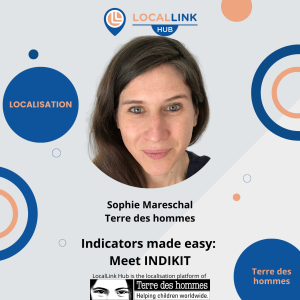
Podcast Episode: Indicators Made Easy - Meet INDIKIT
Welcome to the Local Link Hub podcast, a show with local impact for global change! In this episode, we explore the world of program indicators with Sophie Mareschal, Quality and Accountability Global Advisor at Terre des hommes. Sophie brings over 15 years of experience in monitoring and evaluation, having worked with organizations like UNICEF, UN Women, and Oxfam.
Episode Highlights:
Introduction to INDIKIT: Sophie explains what INDIKIT is, its origins, and how it has been customized for Terre des hommes.
Importance of Indicators: Learn why having a standardized set of indicators is crucial for measuring program success and ensuring quality.
Development Process: Discover the extensive work behind creating the INDIKIT library, including prioritizing indicators and developing measurement guidance.
Usage and Benefits: Understand how INDIKIT helps TDH staff and partners show collective impact, improve monitoring and evaluation techniques, and enhance professional practices.
Future Plans: Sophie shares insights on how INDIKIT will continue to evolve with user feedback and additional indicators.
For more information about Terre des hommes initiatives, visit locallink.childhub.org. Share your thoughts and comments via social media or email us at locallink.childhub.org.
Mar 4, 2025
Mar 4, 2025
25 min
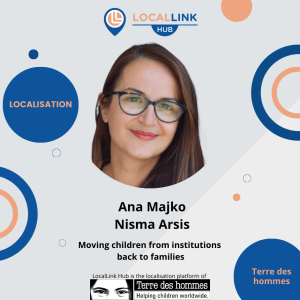
In this episode of the LocalLink Hub podcast, we explore the inspiring work of Nisma Arsis, an organization dedicated to protecting vulnerable children in Albania. Our guest, Anna Majko, Executive Director of Nisma Arsis, shares her journey from studying psychology to becoming a leader in child protection. With over 13 years of experience, she has played a key role in supporting children affected by trafficking, abuse, and exploitation. She explains how her organization started by helping children in street situations and has since expanded to offer a range of services, including community centers, emergency shelters, and family support programs.
A major focus of our discussion is the importance of moving children out of institutions and back into family care. Anna shares how Nisma Arsis, in collaboration with local authorities, has been working to close residential care institutions and develop community-based services that keep children with their families. She explains why institutional care is not a suitable solution for children and how supporting families directly can lead to better outcomes. By working closely with municipalities and advocating for foster care systems, they are making real progress in shifting child protection policies in Albania.
We also touch on the complex and sensitive issue of human trafficking. Anna describes the challenges of identifying and rescuing children who are at risk, often due to poverty and exploitation by criminal networks. She highlights the difficulties of reintegrating these children when systemic gaps, such as a lack of foster care options and social services, make it hard to provide long-term solutions. Despite these obstacles, Nisma Arsis works tirelessly with law enforcement and social workers to ensure that trafficked children receive the protection and care they need.
Finally, Anna shares a heartwarming success story of how Nisma Arsis helped close two institutions and transition children back to family-based care. She discusses the positive impact this change has had on children’s lives and the ongoing efforts to expand this model. This episode is a powerful reminder that every child deserves a safe and loving home, and that local organizations like Nisma Arsis are making a real difference in their communities. Tune in to hear more about their work, the challenges they face, and their vision for a future where no child grows up in an institution.
Jan 24, 2025
Jan 24, 2025
21 min
On May 11, 2023 Thakurbaba municipality became the first in Nepal to be recognized as a Total Handwashing Municipality. They started with only 6,7% of homes having accessible handwashing stations. To achieve this Susila, a Wash campaigner with a beautiful handwashing song and 97 more like of her helped. An also Geruwa, the local partner of Tdh was a major factor.
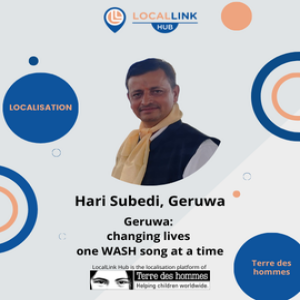
In our first podcast in 2025 we are talking with Hari Subedi, Executive director of Geruwa rural asssociation about the water, sanitation and hygiene programm (Wash) they are implementing in the Nepal. We also speak about the Blue Schools program, that change the lives of teenage girls and of their families.
Dec 4, 2024
Dec 4, 2024
36 min
Beyond the Master Servant Dynamic: Degan Ali on Localization and Decolonization
In this powerful episode of the LocalLink Hub podcast, Degan Ali, executive director of Adesso and co-founder of NEAR Network, provides a profound critique of power dynamics in international aid. Drawing from her personal experiences as a Somali-American humanitarian leader, Ali dissects the complex issues of localization and decolonization in the aid sector.
Ali distinguishes between localization—moving money and leadership roles to local actors—and decolonization, which challenges the fundamental structures that create aid dependency. She argues for a radical reimagining of international NGOs, suggesting they should:
- Deeply reflect on their future relevance- Invest in building local organizational capacity- Create truly equitable partnerships- Reduce their direct operational presence- Share funding and decision-making transparently
The conversation explores the significant barriers global south organizations face, including limited resources, short-term project funding, and language limitations. Ali advocates for local organizations to gain financial sovereignty and for global south governments to set stronger conditions for international aid.
Her vision for the next decade includes local organizations becoming more united, international NGOs integrating localization principles into their core DNA, and ultimately sunsetting initiatives like the Pledge for Change by 2030 because equitable practices have become standard.
A must-listen for anyone interested in humanitarian aid, global development, and systemic change.